What Scandinavian style means
What does Scandinavian design at the table actually mean?
Scandinavian design is a design language born in the Nordic countries in the 1950s, built on three principles: functionality, formal essentiality and honesty of materials. At the table, this means avoiding decoration for its own sake and letting the object's form — its proportion, its profile — carry the design. It isn't a matter of colour or season, but of structure: clean lines, few surfaces, sharp contrasts between different materials.
Why Scandinavian design strips away decoration
Scandinavian design treats ornament as something to justify, not to add by default. A shape earns its curve, a handle earns its taper — if a detail doesn't serve function or structure, it's left out. This isn't emptiness for its own sake: the restraint is what makes proportion, material and finish visible on their own terms, without competing decoration around them. The result is an object that reads clearly at a glance, because there's nothing extra between the eye and the form.
How to recognise Scandinavian style in a piece of cutlery
A few concrete criteria help tell a Scandinavian-inspired piece of cutlery from something that merely looks minimal:
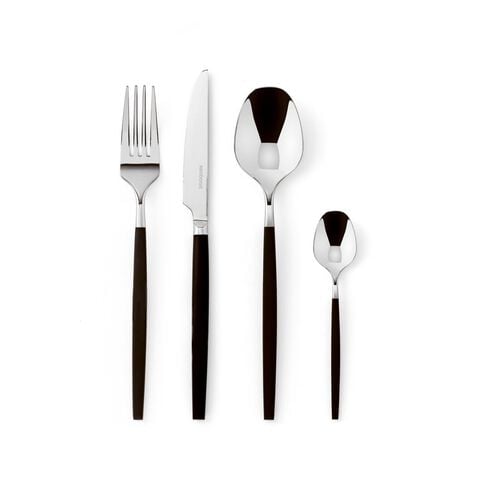
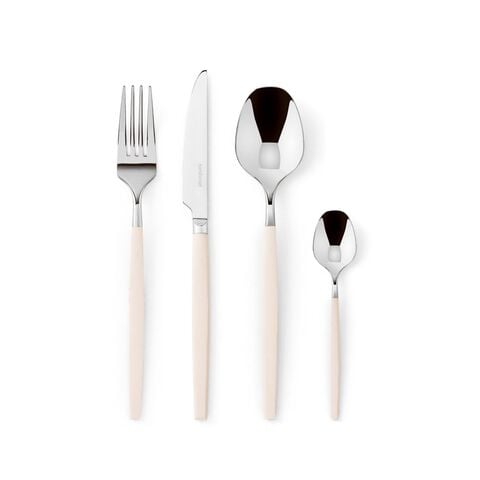
- Contrasting handle — often in a different material from the blade or tines, with a sharp transition rather than a gradual one
- Rounded edges — soften the profile without adding decoration
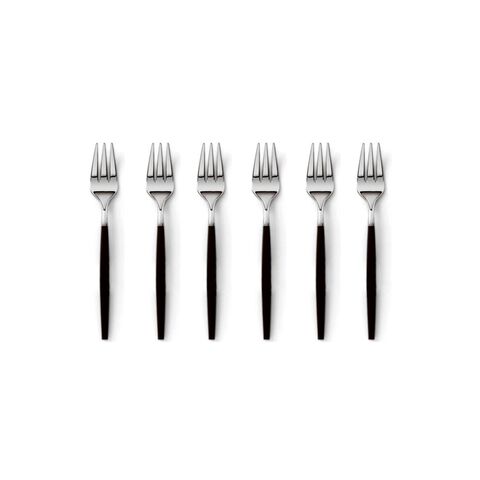
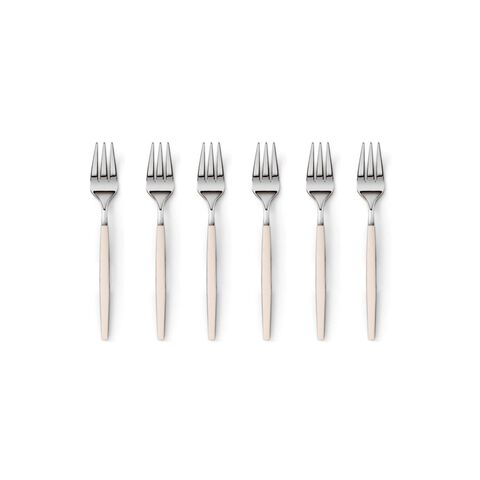
- Neutral palette — black, ivory, grey: colours that don't compete with the plate or the table
- Constructive coherence — the join between different materials is designed to go unnoticed, integrated into the design rather than hidden.
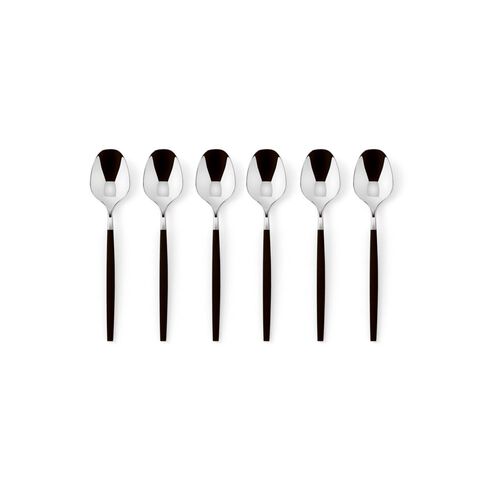
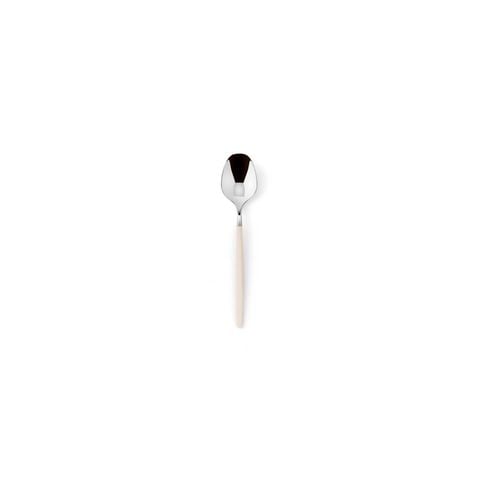
Siro's two finishes, black and ivory, are designed to work in exactly this register: they sit against a white or light grey tablecloth without introducing a third colour to the composition.